
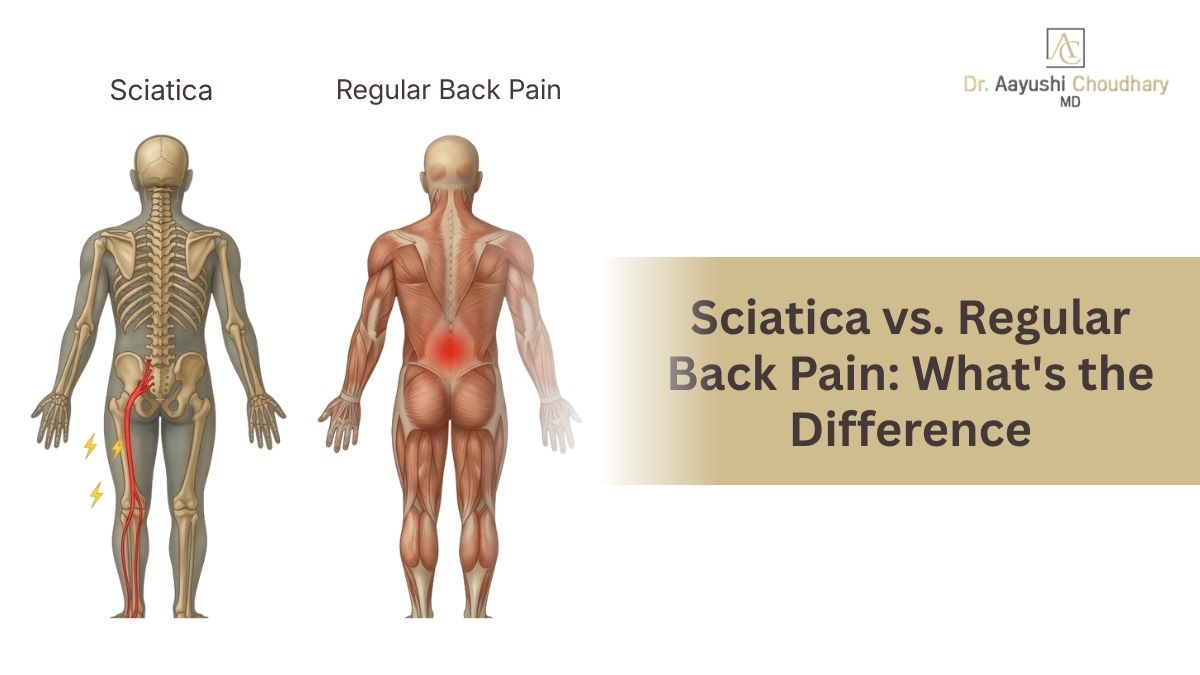
Back pain is one of the leading causes of discomfort and disability worldwide. While many people assume all back pain is the same, sciatica and regular back pain are two different conditions that require different approaches to diagnosis and treatment. Understanding the difference is essential because treating sciatica like a simple muscle strain may delay recovery and worsen symptoms.
In this expert guide, we'll explain the key differences between sciatica and regular back pain, their causes, symptoms, diagnosis, and the most effective treatment options.
What Is Regular Back Pain?
Regular back pain is a broad term that refers to pain affecting the muscles, ligaments, joints, or bones of the back. It is often caused by muscle strain, poor posture, prolonged sitting, heavy lifting, or age-related wear and tear.
Most cases improve with rest, physiotherapy, and lifestyle modifications.
Common Causes of Regular Back Pain
- Muscle strain or ligament injury
- Poor posture
- Prolonged sitting
- Heavy lifting
- Sports injuries
- Degenerative disc disease
- Osteoarthritis
- Sedentary lifestyle
- Obesity
What Is Sciatica?
Sciatica is not a disease—it is a symptom caused by irritation or compression of the sciatic nerve, the longest nerve in the human body. The sciatic nerve begins in the lower spine and travels through the hips, buttocks, and down each leg.
When this nerve is compressed, it produces pain that radiates from the lower back into the buttocks and one or both legs.
Sciatica vs. Regular Back Pain: Quick Comparison
| Feature | Sciatica | Regular Back Pain |
|---|---|---|
| Cause | Compression or irritation of the sciatic nerve | Muscle strain, ligament injury, arthritis, poor posture, or spinal conditions |
| Pain Location | Lower back, buttock, and leg | Usually limited to the back |
| Pain Type | Sharp, burning, shooting, or electric shock-like | Dull, aching, or stiff |
| Radiation | Travels down one leg | Usually does not radiate below the knee |
| Numbness/Tingling | Common | Rare |
| Muscle Weakness | May occur | Uncommon |
| Walking | Can become difficult | Usually manageable |
| Treatment | Requires treatment of the underlying nerve compression | Conservative care in most cases |
Symptoms of Regular Back Pain
People with regular back pain commonly experience:
- Dull aching pain
- Muscle stiffness
- Localized tenderness
- Difficulty bending or twisting
- Pain after prolonged sitting or standing
- Muscle spasms
- Pain that improves with rest
Symptoms of Sciatica
Sciatica often causes more intense symptoms, including:
- Sharp pain starting in the lower back
- Pain radiating to the buttock
- Pain traveling down the back of the thigh and leg
- Burning sensation
- Tingling or "pins and needles"
- Numbness
- Muscle weakness
- Difficulty standing or walking
- Pain that worsens while coughing, sneezing, or sitting for long periods
Typically, sciatica affects only one side of the body.
What Causes Sciatica?
Several conditions can compress the sciatic nerve, including:
Herniated (Slip) Disc
The most common cause of sciatica, where a damaged spinal disc presses on the nerve.
Spinal Stenosis
Narrowing of the spinal canal can put pressure on nerve roots.
Degenerative Disc Disease
Age-related disc degeneration may contribute to nerve irritation.
Piriformis Syndrome
A tight or inflamed piriformis muscle can compress the sciatic nerve.
Spondylolisthesis
A slipped vertebra may compress nearby nerves.
Spinal Injuries
Trauma or fractures involving the spine can also cause sciatica.
What Causes Regular Back Pain?
Unlike sciatica, regular back pain usually results from:
- Muscle overuse
- Poor lifting techniques
- Weak core muscles
- Long hours at a desk
- Obesity
- Arthritis
- Stress-related muscle tension
- Aging
When Should You See a Specialist?
Consult a pain or spine specialist if:
- Pain lasts longer than two weeks.
- Pain radiates into your leg.
- You experience numbness or tingling.
- You notice weakness in your foot or leg.
- Walking becomes difficult.
- Pain keeps returning.
- Home remedies do not help.
- Pain interferes with sleep or daily activities.
Seek immediate medical attention if back pain is accompanied by loss of bladder or bowel control, severe leg weakness, or numbness around the groin area, as these may indicate a medical emergency.
How Are These Conditions Diagnosed?
A specialist begins with a detailed medical history and physical examination.
Depending on your symptoms, investigations may include:
- X-rays
- MRI scan
- CT scan
- Musculoskeletal Ultrasound (MSK USG)
- Nerve conduction studies
- Blood tests (if infection or inflammatory disease is suspected)
An accurate diagnosis is essential because treatment differs significantly between muscle-related pain and nerve-related pain.
Treatment for Regular Back Pain
Most patients improve with conservative treatment.
Medications
Your doctor may prescribe:
- Pain relievers
- Anti-inflammatory medicines
- Muscle relaxants
Physiotherapy
A structured rehabilitation program helps:
- Strengthen core muscles
- Improve posture
- Increase flexibility
- Reduce pain
- Prevent future episodes
Lifestyle Changes
- Maintain a healthy weight.
- Exercise regularly.
- Improve workstation ergonomics.
- Avoid prolonged sitting.
- Practice proper lifting techniques.
Treatment for Sciatica
Treatment focuses on relieving pressure on the sciatic nerve.
Medications
Depending on the cause, your doctor may recommend:
- Anti-inflammatory medications
- Nerve pain medications
- Muscle relaxants
Physiotherapy & Rehabilitation
Specialized exercises help:
- Reduce nerve irritation
- Improve flexibility
- Strengthen spinal support muscles
- Restore mobility
Interventional Pain Management
If conservative treatments fail, minimally invasive procedures may be recommended, including:
- Epidural steroid injections
- Selective nerve root blocks
- Image-guided pain injections
- Regenerative therapies (when clinically appropriate)
Surgery
Surgery is considered only when:
- Severe nerve compression persists
- Significant muscle weakness develops
- There is loss of bladder or bowel control
- Conservative treatment has failed
Can Sciatica Be Prevented?
While not all cases are preventable, you can reduce your risk by:
- Maintaining proper posture
- Exercising regularly
- Strengthening your core muscles
- Stretching daily
- Avoiding prolonged sitting
- Lifting heavy objects correctly
- Maintaining a healthy body weight
About Dr. Aayushi Choudhary - Pain, Musculoskeletal Medicine, and Rehabilitation Specialist
Dr. Aayushi Choudhary is a renowned Pain, Musculoskeletal Medicine, and Rehabilitation Specialist with expertise in diagnosing and treating back pain, neck pain, sciatica, slip disc, spine disorders, knee pain, sports injuries, and chronic musculoskeletal conditions.
Qualifications
- MBBS
- MD PMR (Pain Musculoskeletal Medicine & Rehabilitation Specialist)
- Fellowship in Interventional Pain Management (FIPM)
- MSK USG (USPRM), Lisbon, Portugal
- President Award 2022 (ESPRM)
A Gold Medalist in MD PMR, Dr. Aayushi Choudhary is recognized for her academic excellence and patient-focused approach. She has successfully helped over 1,000 patients avoid unnecessary surgeries through accurate diagnosis, evidence-based rehabilitation, minimally invasive pain management, and personalized treatment plans that address the root cause of pain rather than just the symptoms.
At Purple Heron Hospital, she combines advanced diagnostic techniques with regenerative medicine, rehabilitation, and interventional pain management to provide long-term relief for patients suffering from spine, joint, and nerve-related disorders. When surgery is clinically necessary, patients receive coordinated care from an experienced multidisciplinary team, ensuring the best possible outcomes.
Final Thoughts
Although sciatica and regular back pain may seem similar, they differ in their causes, symptoms, and treatment. Regular back pain often results from muscle strain or poor posture, while sciatica is caused by irritation or compression of the sciatic nerve and typically produces pain that radiates into the leg.
Ignoring persistent or radiating pain can lead to prolonged discomfort and complications. Seeking an early evaluation from a qualified pain and rehabilitation specialist can help identify the root cause and ensure you receive the most appropriate treatment for lasting relief.