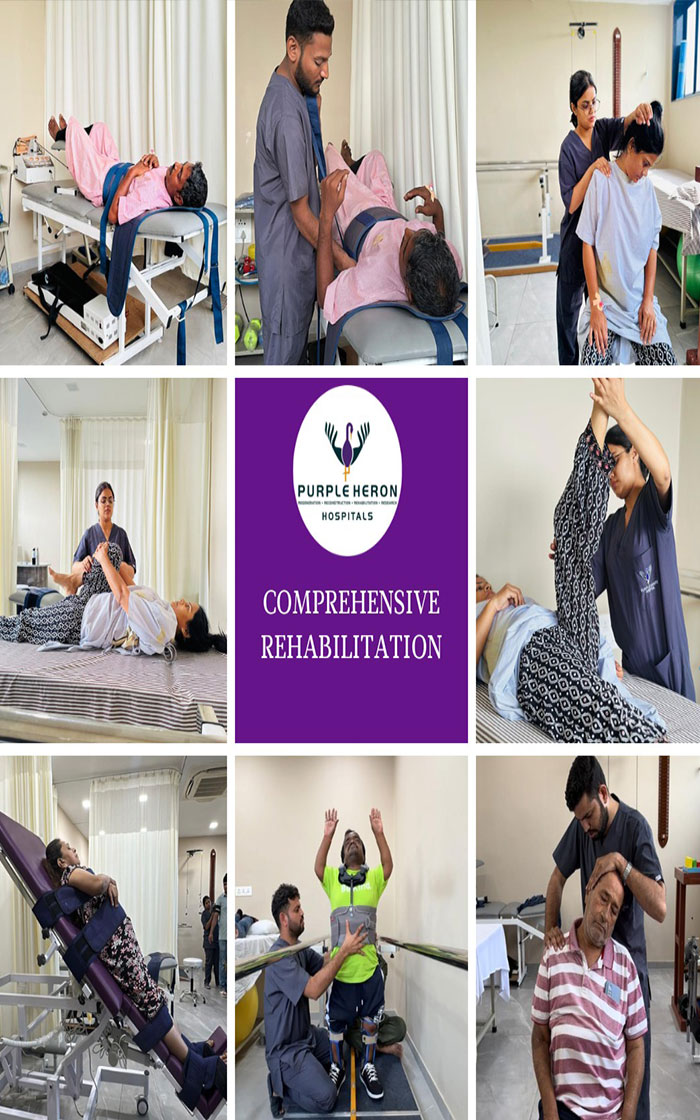
Treating the Cause Begins with Understanding Function. Pain is only one part of the patient's story.
Two patients may describe similar neck pain, yet one struggles to work at a computer for more than twenty minutes, another cannot sleep comfortably through the night, while a third has difficulty performing surgery, driving long distances, lifting a child, or returning to sport. Although the diagnosis may appear similar, the functional limitations and therefore the rehabilitation strategy can be entirely different.
For this reason, rehabilitation at Purple Heron Hospital begins with a comprehensive functional assessment, designed to understand not only where the pain is coming from but also how it is affecting the patient's movement, work, independence, and quality of life. Rather than focusing only on pain intensity or imaging findings, we evaluate how the entire musculoskeletal and neuromuscular system is functioning. Our assessment may include:
Functional Capacity Assessment Understanding how neck pain affects everyday life is one of the most important parts of rehabilitation planning. We assess the patient's ability to perform occupational tasks, household activities, self-care, recreation, travel, sports, and other activities that are meaningful to them. Rehabilitation goals are then prioritised according to the individual's functional needs rather than a generic recovery timeline.
Movement Analysis Every movement tells a story. The quality of movement often reveals far more than static imaging alone. We assess how the neck, shoulders, upper back, and surrounding joints move together during functional activities to identify compensatory patterns, movement restrictions, guarding, asymmetry, or abnormal loading that may be contributing to persistent pain.
Muscle Performance Assessment Muscles do far more than generate strength. They provide stability, endurance, coordination, joint protection, and movement control. We evaluate muscle performance according to the patient's condition, including activation patterns, endurance, fatigue, coordination, and overall functional capacity.
Joint Mobility Assessment Restricted mobility in one region often increases stress on another. Assessment of cervical mobility, thoracic mobility, shoulder mechanics, and related joints helps identify movement limitations that may influence pain, posture, and overall spinal function.
Neurological Assessment When symptoms suggest nerve or spinal cord involvement, rehabilitation planning also considers neurological function, including evaluation of muscle power, sensation, reflexes, coordination, balance, and fine motor control.
Functional Goal Setting Every patient has different expectations from treatment. For one individual, success may mean returning to office work without pain. For another, it may involve performing long surgical procedures, participating in competitive sport, travelling comfortably, caring for family members, or simply sleeping peacefully through the night. These goals become the foundation upon which the rehabilitation programme is designed.
At Purple Heron Hospital, rehabilitation is therefore guided not by a diagnosis alone, but by function. Because successful rehabilitation is not measured only by reduced pain it is measured by helping people return to the life they want to live.