Image-Guided Comprehensive Minimum Interventions at Purple Heron Hospital
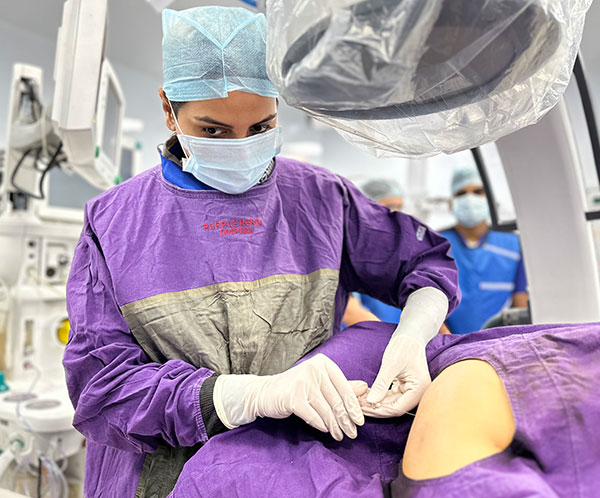
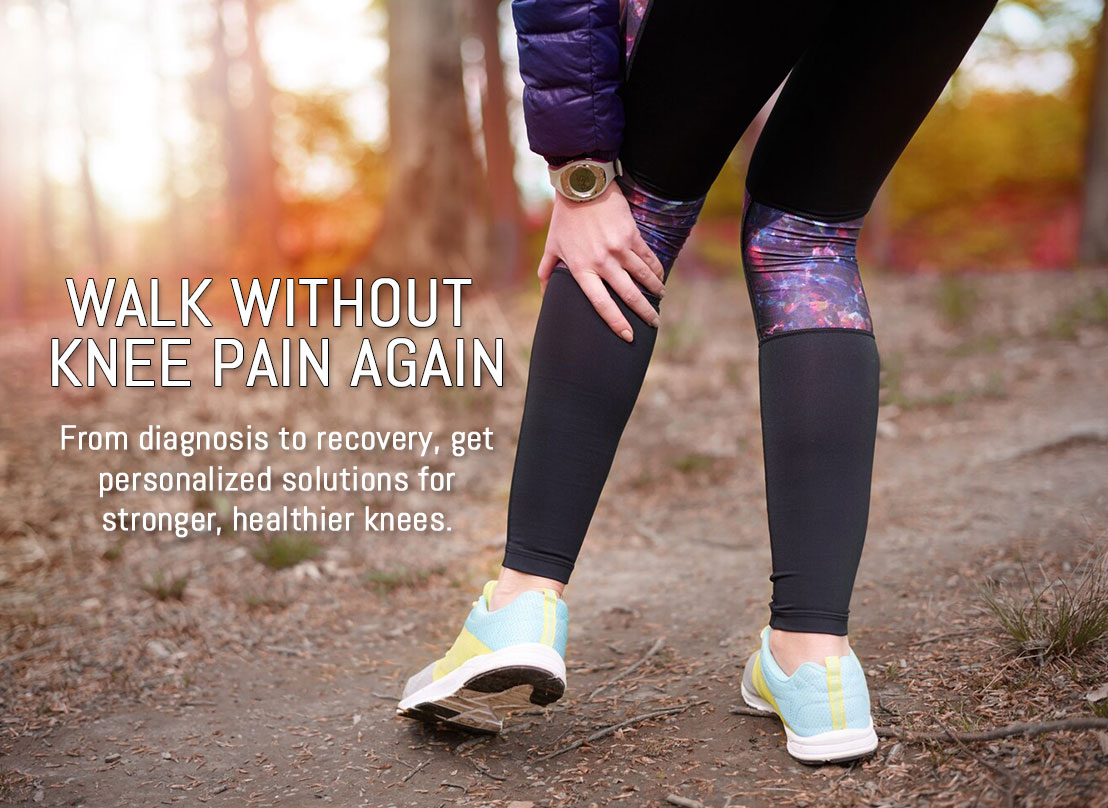
At Purple Heron Hospital, Dr. Aayushi employs a cutting-edge, image-guided, minimally
invasive approach to manage knee pain.
This comprehensive protocol
integrates the latest advancements in regenerative medicine, nerve blocks, and other
targeted interventions to address the diverse causes of knee pain, ensuring precise
treatment and promoting long-term healing. Here’s an overview of these advanced
interventions:
1. Image-Guided Intra-Articular Interventions
Intra-Articular Blocks: These interventions involve the precise
injection of medications directly into the knee joint to manage pain and inflammation,
especially in conditions like osteoarthritis and post-traumatic arthritis. By using
imaging technologies such as ultrasound or C-arm fluoroscopy, these blocks are delivered
accurately to reduce pain and improve joint function.
Viscosupplementation: Image-guided viscosupplementation with hyaluronic
acid helps lubricate the knee joint, easing movement and reducing pain, particularly in
osteoarthritis patients. This intervention cushions the joint surfaces, improving
mobility and delaying the need for surgical interventions.
2. Image-Guided Nerve Blocks
Genicular Nerve Block: Targets the genicular nerves around the knee to
alleviate pain from osteoarthritis or post-surgical conditions.
Sciatic Nerve Blockon: Provides relief for knee pain radiating to the
lower leg, commonly used after knee surgeries.
Adductor Canal Block: Maintains quadriceps function while providing
pain relief, ideal for postoperative pain management.
Popliteal Nerve Block: Effective for managing posterior knee pain,
particularly useful in post-surgical settings.
Cryoneurolysis: This involves freezing specific nerves to block pain
transmission, offering relief for chronic knee pain, especially in osteoarthritis cases.
Image guidance ensures precise targeting of the nerves.
Radiofrequency Ablation (RFA): This technique ablates nerve fibers to
reduce chronic pain, particularly in cases of osteoarthritis, with image guidance
ensuring the procedure's accuracy.
3. Image-Guided Regenerative Medicine Protocols
Prolotherapy: Involves the injection of a proliferant solution to
stimulate the body’s natural healing processes in damaged ligaments and tendons. When
guided by imaging, prolotherapyinjections are delivered precisely to areas like partial
ACL tears and meniscal injuries, promoting tissue regeneration.
Growth Factor Concentrate (GFC) Therapy: This advanced treatment uses
growth factors derived from the patient’s blood to regenerate knee tissues. Image-guided
GFC injections are particularly effective for partial ACL or meniscal tears, enhancing
healing and reducing recovery time.
Stem Cell Therapy: Involves injecting stem cells, derived from bone
marrow or adipose tissue, directly into the knee joint under image guidance to
regenerate damaged cartilage and other joint tissues.
4. Management of Baker’s Cyst and Knee Effusions
- Baker’s Cyst Aspiration: Involves the injection of a proliferant
solution to stimulate the body’s natural healing processes in damaged ligaments and
tendons. When guided by imaging, prolotherapyinjections are delivered precisely to areas
like partial ACL tears and meniscal injuries, promoting tissue regeneration.
- Arthrocentesis: This technique removes excess fluid from the knee
joint under image guidance, alleviating pain and swelling caused by conditions like
inflammatory arthritis or traumatic injury.
5. Image-Guided Fat Pad Microneedling
Fat Pad Microneedling: This innovative procedure targets the inflamed
infrapatellar fat pad, which can contribute to anterior knee pain. Microneedles are used
under ultrasound guidance to stimulate healing and reduce inflammation, making it
particularly effective for conditions such as patellar tendinitis or Hoffa’s
syndrome.
6. Osteopore for Subchondral Defects
Osteopore Implants: These bioresorbable implants act as a scaffold for
bone regeneration in cases of subchondral defects. Using imaging technologies, these
implants are placed precisely, facilitating the regeneration of bone tissue and
improving knee function.
7. High-Volume Image-Guided Injection (HVIGI)
HVIGI: Used for conditions like patellar tendinopathy, this technique
involves injecting a large volume of saline solution around the affected tendon or
ligament to break down adhesions and promote healing. Image guidance ensures precise
delivery of the injection, enhancing the procedure’s effectiveness.
8. Ultrasound-Guided Perineural Injection Therapy (PIT)
PIT: This therapy involves injecting a dextrose solution around
peripheral nerves under ultrasound guidance. It is particularly effective in treating
chronic nerve pain associated with knee osteoarthritis or tendinitis, providing
long-lasting pain relief.