
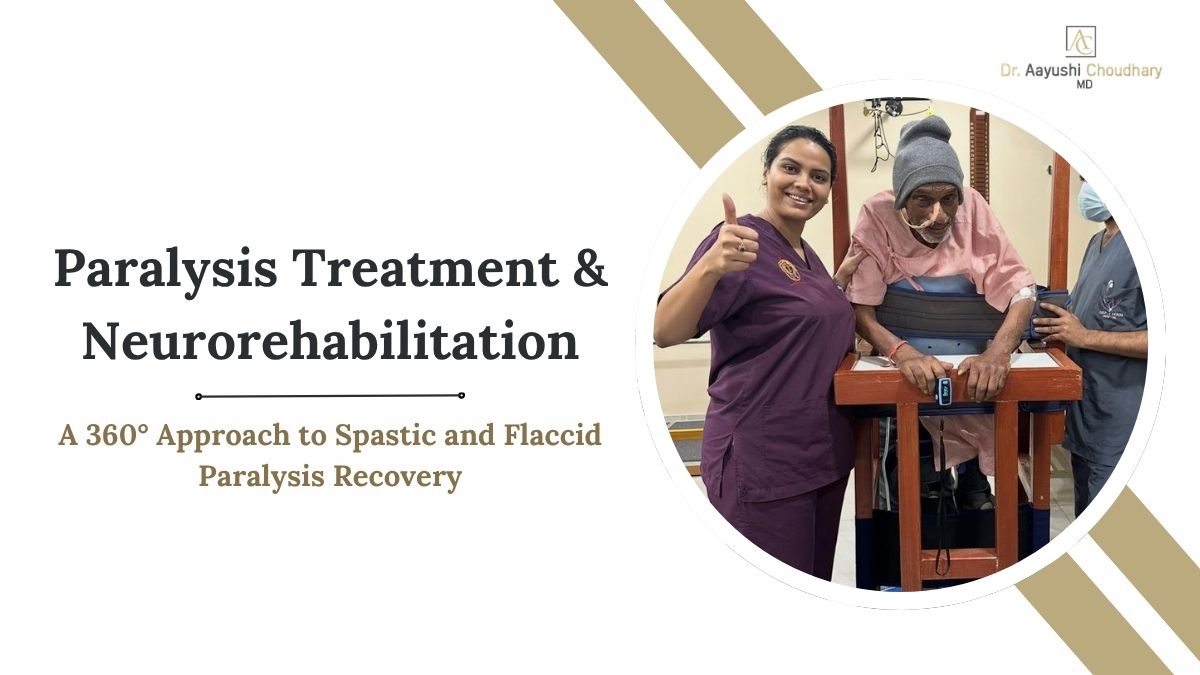
Paralysis is not just a diagnosis—it is a life-altering event. What we often see on the surface—an immobile limb, a stiff body, a non-functional hand—is only the tip of the iceberg. Beneath it lies a complex interplay of neurological injury, musculoskeletal imbalance, loss of independence, and often, a silent emotional struggle.
In modern medicine, the biggest mistake is to treat paralysis as a physiotherapy-only condition. In reality, paralysis treatment requires a deeply personalized, interventional, and holistic neurorehabilitation approach—one that restores not just movement, but dignity, independence, and purpose.
Understanding Paralysis: The First and Most Critical Step
Before any treatment begins, one fundamental question must be answered:
What type of paralysis are we dealing with?
1. Upper Motor Neuron (UMN) Paralysis – Spastic Paralysis
- Common causes: Stroke, cervical spine injury, brain injury
- Features:
- Muscle stiffness (spasticity)
- Tightness and abnormal postures
- Difficulty in walking, hygiene, and mobility
- Often associated with spastic bladder and bowel dysfunction
2. Lower Motor Neuron (LMN) Paralysis – Flaccid Paralysis
- Common causes: Peripheral nerve injury, Guillain-Barré Syndrome, spinal cord injury (lower levels)
- Features:
- Floppy, weak muscles
- Reduced tone
- Joint instability
- Higher dependency for movement and support
Understanding whether the paralysis is spastic or flaccid is not academic—it defines the entire treatment pathway.
Paralysis is Functional Loss—So Treatment Must Be Functional
The real question is not:
“Can the patient move?”
But:
“Can the patient live independently?”
At its core, paralysis treatment must address:
- Mobility
- Toileting & hygiene
- Bladder & bowel control
- Social reintegration
- Ability to work and function
The Modern Approach: Interventional Neurorehabilitation
Rehabilitation is not just exercise. It is a combination of medical intervention + structured rehabilitation + lifestyle redesign.
1. Targeted Spasticity Management (For Spastic Paralysis)
- Ultrasound-guided Botulinum toxin injections (e.g., Botox)
- Reduces muscle stiffness
- Improves limb positioning
- Enables functional training
- Intravesical Botox (Bladder Management)
- Increases bladder capacity
- Reduces urinary leakage
- Improves social mobility and dignity
- Surgical Interventions (if needed)
- Tendon release procedures for severe contractures
2. Orthotic & Splinting Corrections
Orthotics are not accessories—they are foundations of functional recovery.
- Static orthotics → Maintain joint alignment
- Dynamic orthotics → Enable mobility
- Advanced AFO/KAFO systems → Improve walking and stability
- Upper limb splints → Prevent deformity and enhance usability
Correct orthotic prescription can convert dependence into independence.
3. Bladder & Bowel Rehabilitation
This is often ignored—but it defines quality of life.
Bladder Rehabilitation
- Timed voiding
- Bladder training & bladder diary
- Clean intermittent catheterization (CIC)
- Intravesical interventions (Botox)
Because you cannot build mobility on a compromised internal system.
Bowel Rehabilitation
- Structured evacuation protocols (3:1 bowel routine)
- Dietary regulation
- Timed bowel training
4. Gait Training & Energy-Efficient Mobility
Walking after paralysis is not natural—it is engineered.
- Post-stroke gait training
- Assistive device optimization
- Podiatric corrections
- Energy conservation techniques
The goal is not just walking-
It is walking without exhaustion, safely, and sustainably.
5. Activities of Daily Living (ADL) & Ergonomic Rehabilitation
A patient does not stop being a parent, a professional, or an individual after paralysis.
- Training for:
- Dressing
- Toileting
- Bathing
- Eating
- Workplace & home modifications
- Ergonomic redesign for functionality
The aim is reintegration, not just recovery.
6. Nutritional Optimization in Neurorehabilitation
Recovery requires building blocks.
- Protein optimization
- Micronutrient balance
- Anti-inflammatory diet
- Muscle preservation strategies
Without nutrition, no rehabilitation protocol can sustain results.
Flaccid Paralysis: A Different Challenge, A Different Strategy
In flaccid paralysis:
- Muscles are weak, not tight
- Joints are unstable
- Standing becomes more difficult
Key Differences in Management:
- Stronger, supportive orthotics
- Joint-stabilizing braces
- Modified bladder strategies
- Intensive assisted rehabilitation
Critical Risk:
Autonomic Dysreflexia (especially in spinal cord injury)
- Must be explained to caregivers
- Requires emergency awareness
Why Random Physiotherapy Fails in Paralysis
Because paralysis is not a muscle problem—it is a system problem.
Fragmented care leads to:
- Poor outcomes
- Contractures
- Social isolation
- Loss of dignity
The Philosophy: Restoration Over Limitation
At Purple Heron Hospitals, under the leadership of Dr. Aayushi Choudhary, paralysis is not treated as a disability—it is approached as a restoration challenge.
The focus is:
- Minimum interventions were needed
- Maximum functional recovery
- 360° comprehensive neurorehabilitation
- Patient reintegration into society
Because the goal is not survival.
The goal is relevance, independence, and dignity.
Early diagnosis plays a critical role in recovery. If you or your loved ones notice unusual symptoms, make sure to read the early warning signs of paralysis and seek timely medical attention.
Conclusion: Paralysis is Not the End—It is a Beginning
Paralysis changes the body, but it should not define the life.
With the right combination of:
- Accurate diagnosis (spastic vs flaccid paralysis)
- Interventional rehabilitation
- Orthotic correction
- Bladder-bowel management
- Gait and ADL training
- Nutritional support
A patient can move from:
- Dependence
- To Function
- To Confidence
- To Life again
Early intervention can change outcomes significantly. Consult a neurorehabilitation expert today and begin your personalized paralysis recovery journey.
For advanced paralysis treatment and personalized neurorehabilitation, consult experts at Purple Heron Hospitals.