
Because Everyone Deserves the Chance toMove, Grow & Thrive.
- Comprehensive Cerebral Palsy Care
- Individualized Assessment & Diagnosis
- Advanced Neurorehabilitation
- Movement & Functional Training
- Long-Term Development & Support
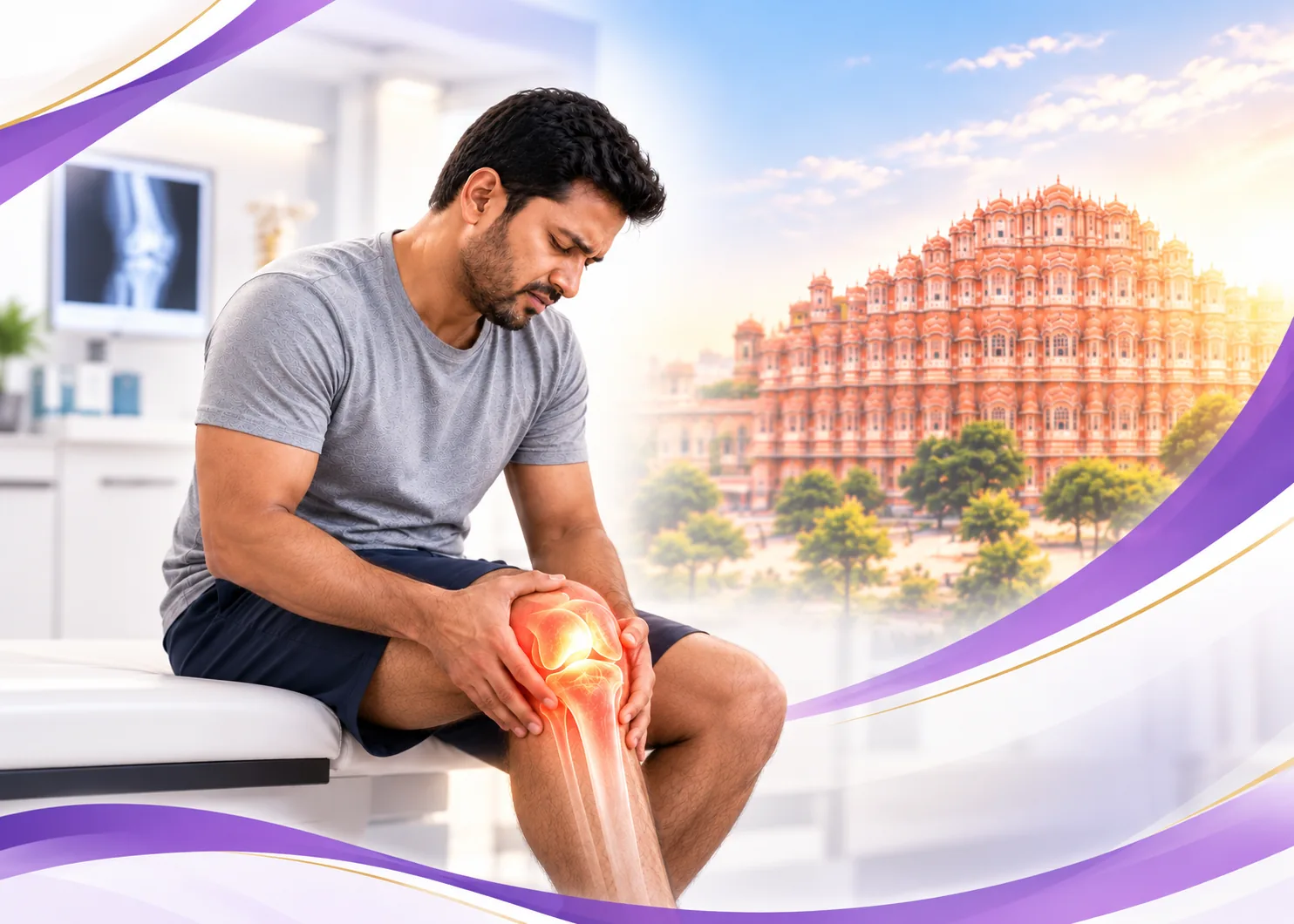
Knee pain can affect much more than your knee. It can change the way you walk, climb stairs, exercise, work, sleep and perform everyday activities. Whether the problem has developed gradually because of arthritis and age-related degeneration or appeared after an injury, sports activity or sudden increase in physical load, identifying the actual source of pain is an important first step toward effective treatment.
Dr. Aayushi Choudhary
- MBBS
- MD (Physical Medicine & Rehabilitation) – Gold Medalist
- Fellowship in Interventional Pain Management (FIPM)
- Musculoskeletal Ultrasound (MSK USG – USPRM), Lisbon, Portugal
- President's Award 2022 European Society of Physical & Rehabilitation Medicine
Best Knee Pain Specialist Doctor in Jaipur
Understanding Specialist Knee Pain & Rehabilitation Care: Why We Treat Function, Not Just Form.
Dr. Aayushi Choudhary provides comprehensive evaluation and personalized management for knee pain, arthritis, stiffness, sports-related knee problems and mobility limitations. The approach focuses not only on reducing symptoms but also on understanding joint mechanics, muscle function, walking pattern and the factors contributing to repeated stress on the knee.
Treatment may include medical management, rehabilitation, movement correction, strengthening, load modification and image-guided interventions where clinically indicated.
The overall objective is simple: reduce pain, restore confident movement and preserve knee function for the long term.
Move Better. Protect Your Knee.
Knee pain is not a diagnosis. It is a signal. Our approach combines precise clinical evaluation, movement analysis, evidence-based care, image-guided interventions when appropriate, and comprehensive rehabilitation.
Pain, Musculoskeletal & Rehabilitation Specialist
Muscles, ligaments, meniscus, joint surfaces, movement patterns and activity demands all influence how forces pass through the knee.
Modern life has changed how our knees are loaded.
Long sitting, sudden workouts, recreational sports, repetitive work, previous injury, reduced conditioning and higher training loads can combine to create repeated mechanical stress.
Long periods of inactivity
Hours of sitting can reduce movement exposure and conditioning.
Sudden high demand
Running, gym training, sports and stairs may suddenly demand more than the body has prepared for.
Altered mechanics
Weakness, past injury and poor rehabilitation can change the way load travels through the knee.
Recurring symptoms
The mismatch between physical capacity and physical demand may contribute to recurrent pain and reduced confidence.
Knee pain can come from very different structures.
Pain during walking, stairs, running, squatting or standing may arise from different tissues. The goal is to identify what is actually contributing to your symptoms.
Osteoarthritis & Degeneration
Knee osteoarthritis, post-traumatic arthritis, chronic stiffness and degenerative joint changes.
Ligament Injuries
ACL injuries, partial ligament injury, instability and sports-related soft-tissue trauma.
Meniscus & Cartilage
Meniscus tears, degenerative meniscal changes, mechanical symptoms and cartilage-related problems.
Patellofemoral & Tendon
Chondromalacia patellae, patellar tendinitis, anterior knee pain and fat-pad irritation.
Inflammatory Conditions
Inflammatory knee conditions, rheumatoid arthritis and joint effusions.
Bursitis & Fluid Problems
Bursitis, Baker’s cyst, knee effusions and selected post-traumatic fluid accumulation.
Sports Knee Problems
Running, jumping, twisting, overload, strength training and sudden training-volume changes.
Complex Knee Dysfunction
Cases where symptoms, imaging, movement and function do not point to one simple cause.
Symptoms are clues — not the diagnosis.
When symptoms occur, what triggers them and how they affect daily function all help build the clinical picture.
Pain & Stiffness
Walking, stairs, prolonged sitting, exercise, running or morning stiffness.
Swelling
Visible swelling, effusion, fullness or restricted bending.
Instability
Giving way, twisting pain, reduced confidence or difficulty changing direction.
Functional Limitation
Difficulty walking, standing, exercising, working or participating in sport.
Seek prompt assessment when symptoms are significant
Severe trauma, inability to bear weight, rapidly increasing swelling, fever with a painful swollen knee, sudden instability or rapidly worsening function.
Imaging can identify structural changes, but it does not fully explain why stairs hurt, why running hurts but walking does not, why symptoms appear only after sitting, or why two patients with similar scans may experience very different levels of pain and disability.
Precision before procedures.
Detailed Clinical History
Onset, progression, injuries, previous treatment, sport, work demands, activities and goals.
Physical Examination
Movement, swelling, tenderness, strength, mobility, patellar function and ligament stability.
Functional Assessment
Walking, squatting, stairs, single-leg control, exercise mechanics and load tolerance.
Posture & Load Analysis
Lower-limb mechanics, conditioning, repetitive movement and activity progression.
Imaging When Appropriate
X-rays, MRI, ultrasound and other investigations — always interpreted in clinical context.
Diagnostic Ultrasound
Real-time assessment of selected tendons, ligaments, bursae, muscles, nerves and soft tissue.
Education First
Patients deserve to understand their condition.
Customized Conservative Medical Management
The goal is not simply to avoid surgery. The goal is to restore pain control, movement, strength and activity tolerance.
When a specific structure needs targeted treatment, accuracy matters.
Image-guided procedures may be considered in selected patients when conservative care is inadequate or when a specific structure needs precise treatment.
Intra-Articular Interventions
Targeted treatment inside the knee joint, including selected viscosupplementation pathways.
Nerve Blocks
Selected genicular, sciatic, adductor canal or popliteal nerve-targeted approaches.
Radiofrequency & Cryoneurolysis
Selected chronic pain pathways designed to reduce sensory pain transmission.
Regenerative Medicine
Selected prolotherapy, GFC or other carefully assessed regenerative protocols.
Baker’s Cyst & Effusion Care
Image-guided aspiration or arthrocentesis where clinically indicated.
Fat Pad & Tendon Procedures
Selected microneedling or high-volume image-guided techniques.
Perineural Injection Therapy
Selected ultrasound-guided treatment around peripheral nerves.
Real-Time Ultrasound Guidance
Continuous visualisation of the target to improve procedural precision.
Precision + Rehabilitation
Procedures are integrated into a broader functional recovery pathway.
Pain relief is not the finish line.
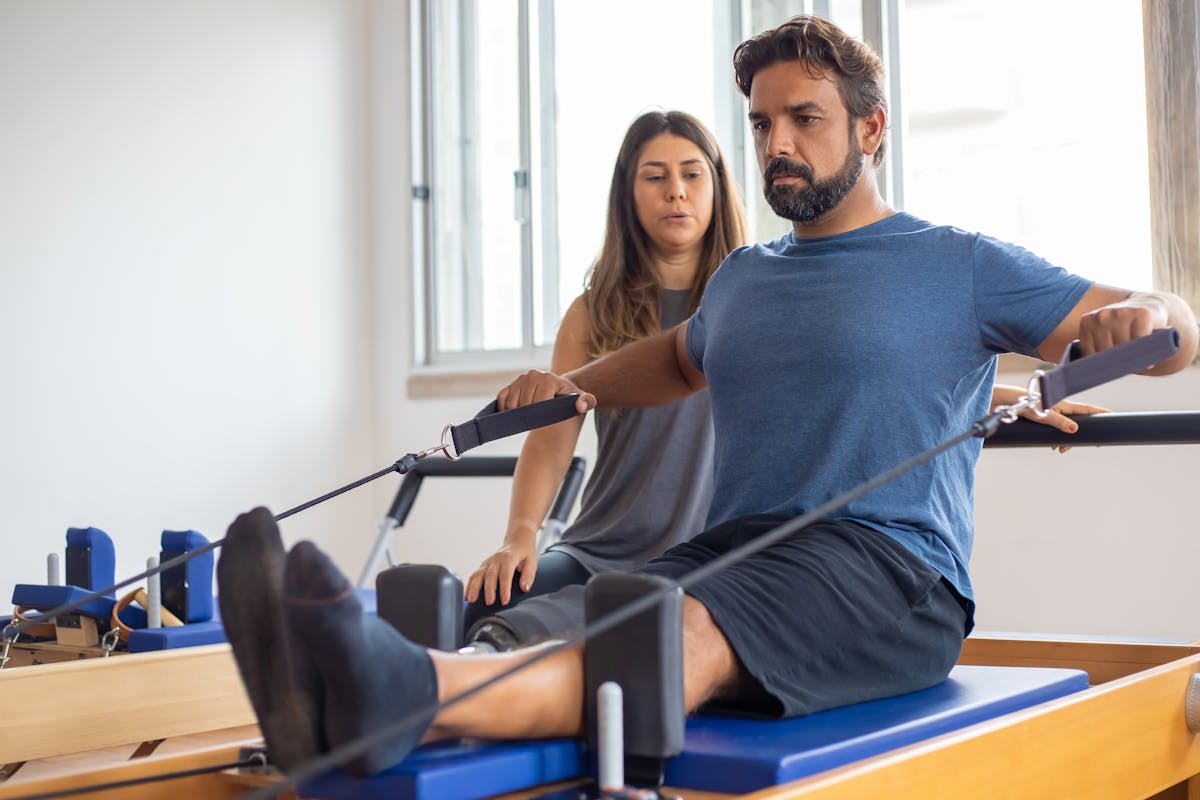
Rehabilitation is a medical process designed around diagnosis, progress, strength, movement quality, endurance, activity demands and personal goals.
Rehabilitation should be guided by diagnosis — not by a standard protocol.
The best knee surgery is the one that is truly necessary.
Modern knee care should preserve function whenever appropriate. MRI findings alone are not enough to justify immediate surgery.
Surgery is part of the journey — not the end of it.
Before Surgery
Assessment, diagnosis, patient selection, optimisation, education and rehabilitation planning.
Hospital Recovery
Coordinated surgical, medical, nursing, pain management and early mobility care.
Return to Function
Movement restoration, strength, confidence and safe return to daily life, work and sport.
Pain should never become your new normal.
Persistent knee pain can affect sleep, confidence, conditioning, mood, work, relationships, independence and quality of life. Chronic pain may become more complex than the original tissue injury alone.
Recovery is more than pain relief. It is about walking more comfortably, sleeping better, moving with confidence, returning to work, exercise, family life and independence.
A rehabilitation-led and interventional approach to knee care.
Dr. Aayushi Choudhary combines clinical evaluation, functional assessment, movement correction, rehabilitation, conservative care and selected image-guided procedures to build an individualised treatment pathway.
The focus is not simply on treating the painful knee. It is on understanding how the knee is functioning within the patient’s complete movement system.
Non-Surgical Knee Pain Care
Preserve function whenever clinically appropriate.
Knee Arthritis Care
Education, load modification, rehabilitation and selected interventions.
Ligament Injury Pathway
Structured rehabilitation with surgical evaluation when needed.
Meniscus-Related Care
Clinical decision-making based on symptoms, function and activity demand.
Because your knee does more than carry your weight. It carries you through your life.
If knee pain is affecting walking, stairs, exercise, work, sports, sleep or everyday activities, a proper evaluation can help identify the cause and the most suitable treatment pathway.